With cotton-candy pink feathers and that unmistakable spoon-shaped bill, the roseate spoonbill is one of the Everglades’ most eye-catching residents. It sweeps its bill through shallow water to feel for fish, shrimp, and crustaceans.
Birds of the Everglades

Roseate spoonbill
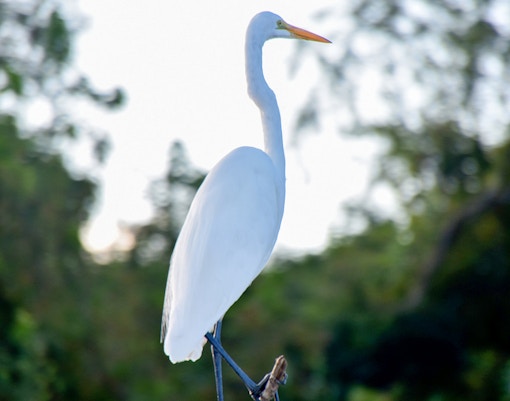
Great egret
Graceful and bright white, the great egret is often seen wading slowly through marshes. Its sharp bill and lightning-fast strike make it a skilled hunter.
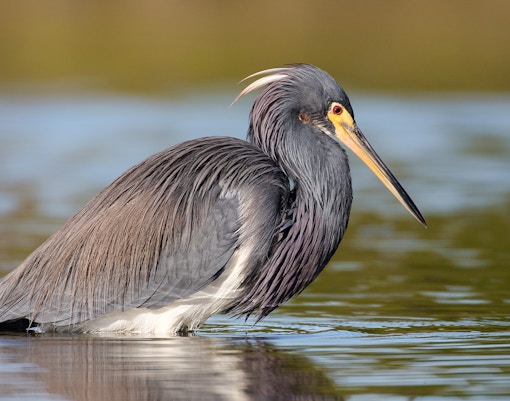
Tricolored heron
Slim and elegant, the tricolored heron mixes blue-gray, lavender, and white tones. It’s active and energetic, often darting after prey in open water.
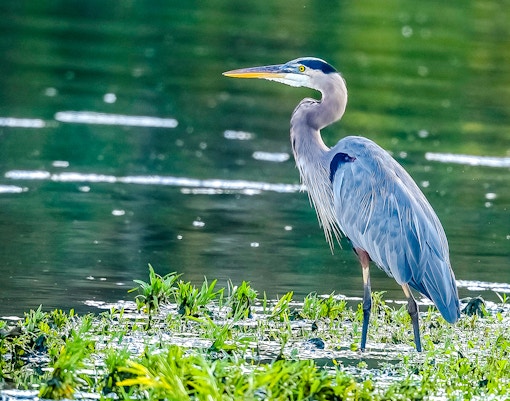
Great blue heron
One of the tallest Everglades birds, the great blue heron is known for its patience. You’ll spot it standing perfectly still, waiting for just the right moment to spear a fish.
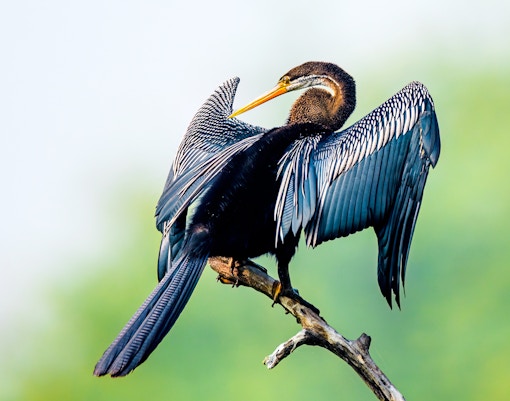
Anhinga
Sometimes called the “snakebird,” the anhinga swims with its body submerged and its long neck rising above the water. After diving for fish, it spreads its wings to dry in the sun.
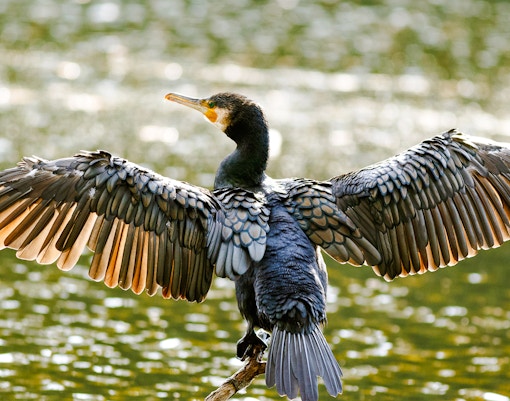
Double-crested cormorant
Common around waterways, cormorants dive deep for fish and then perch nearby with wings outstretched. They’re often seen sharing spots with anhingas.
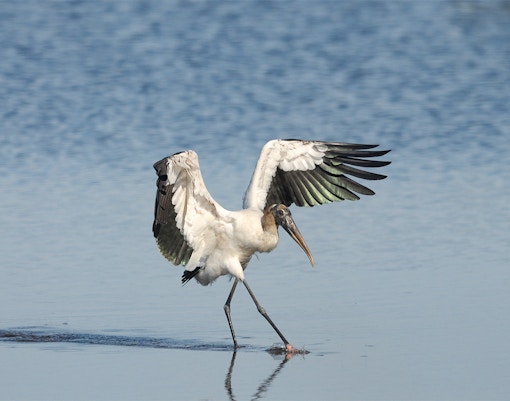
Wood stork
This tall, bald-headed bird is one of the Everglades’ conservation success stories. It feeds by snapping its beak shut the moment it senses movement in the water.
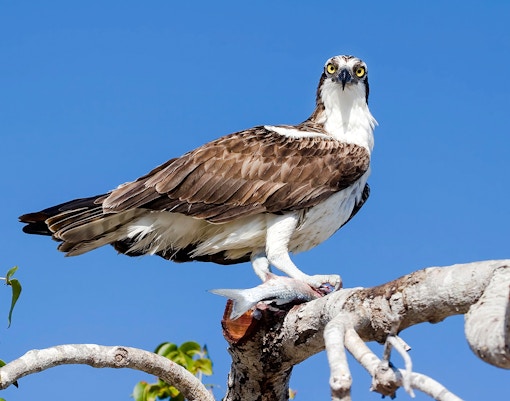
Osprey
The osprey is a fish-eating raptor that you’ll see hovering over the water before plunging feet-first to catch its prey. Their massive nests are easy to spot perched atop tall platforms and trees.
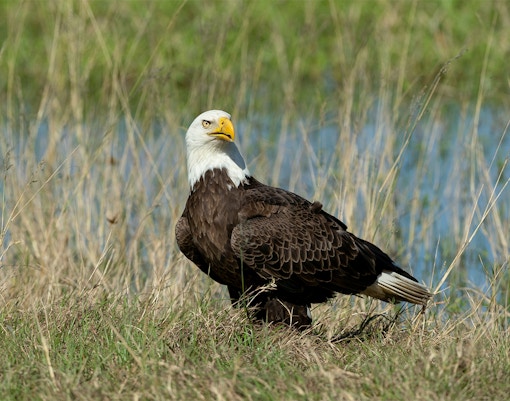
Bald eagle
America’s national bird is a regular sight in the Everglades. Look for them near open water, especially in winter, where they hunt fish and scavenge for food.
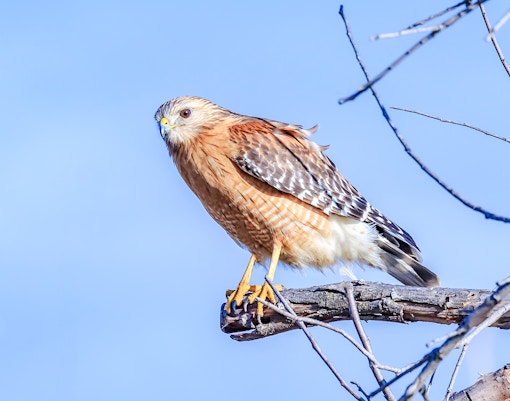
Red-shouldered hawk
Often heard before it’s seen, this hawk has a distinctive call that echoes across the wetlands. It hunts snakes, frogs, and small mammals.
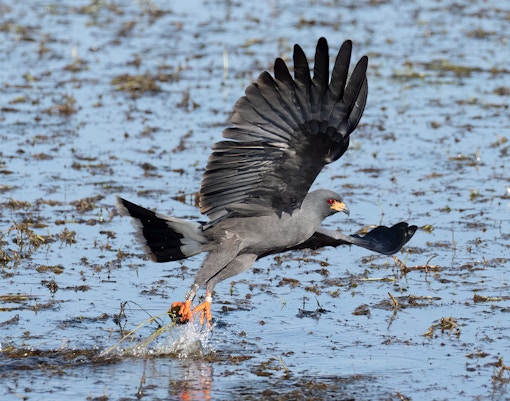
Snail kite
Found almost exclusively in South Florida, this raptor feeds mainly on apple snails. Its curved bill is perfectly shaped to pull snails from their shells.
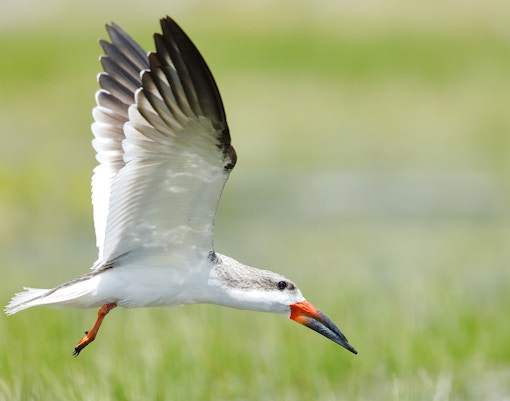
Black skimmer
Recognizable by its bright orange beak with the longer lower mandible, the black skimmer glides just above the surface to scoop up small fish. You’re most likely to spot them along coastal or brackish edges.
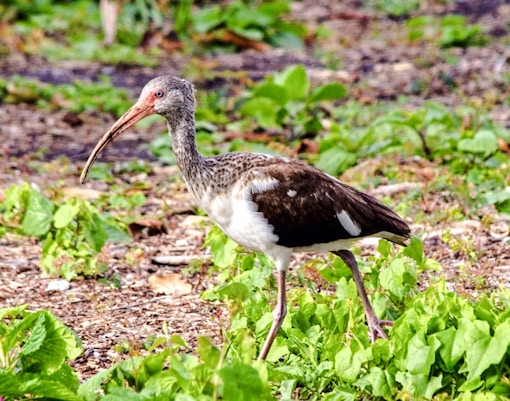
White ibis
A familiar sight in both wetlands and roadside lawns, the white ibis uses its curved red bill to probe for insects and crustaceans. They often gather in large, social flocks.
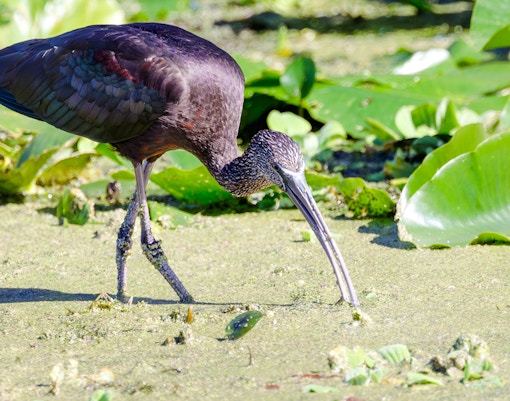
Glossy ibis
Slightly darker and more iridescent than the white ibis, the glossy ibis has a bronze-green sheen that glows in the sun. They forage quietly in marshy areas.
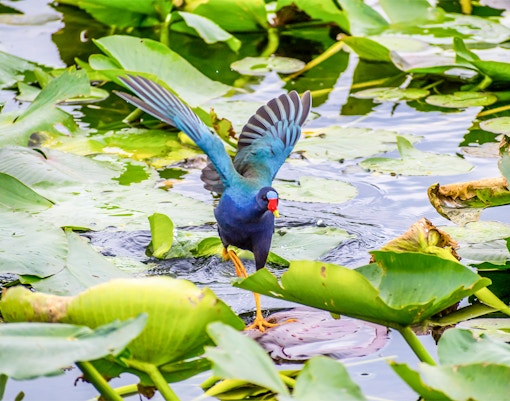
Purple gallinule
A brilliantly colored bird with bright blue plumage and yellow legs, the purple gallinule almost looks tropical. It walks effortlessly across floating vegetation.
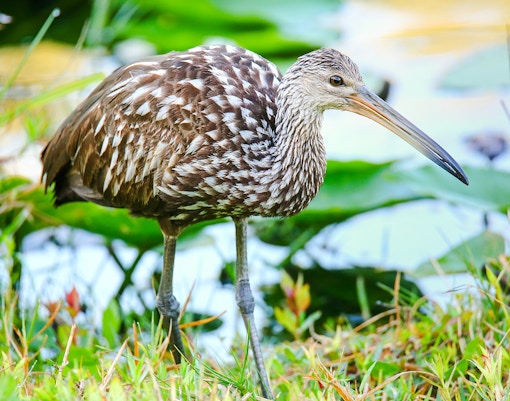
Limpkin
Limpkins are shy, brown birds known for their loud, wailing call. They’re closely tied to apple snails, which make up most of their diet.
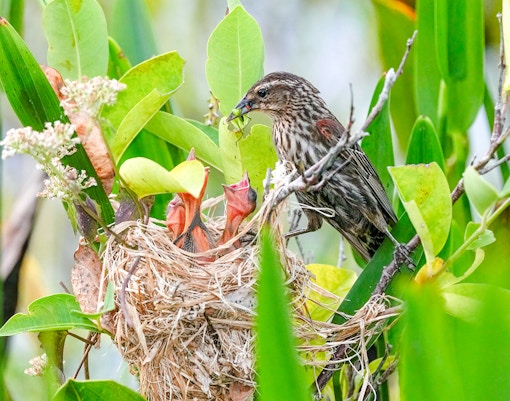
Red-winged blackbird
These small, glossy black birds with red shoulder patches are easy to spot perched on reeds. Their sharp, musical calls are part of the Everglades’ soundtrack.
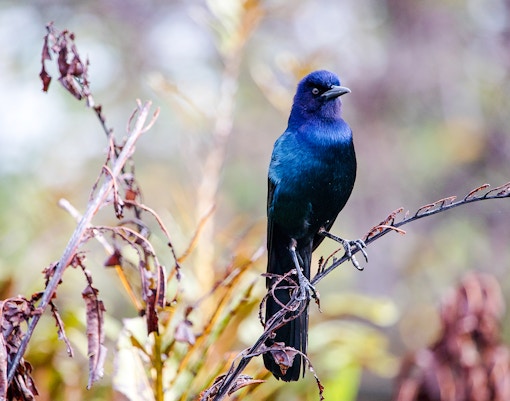
Boat-tailed grackle
Bold and noisy, grackles are often found in groups around parking lots, visitor centers, and wetlands. Males shine iridescent blue when the light hits just right.
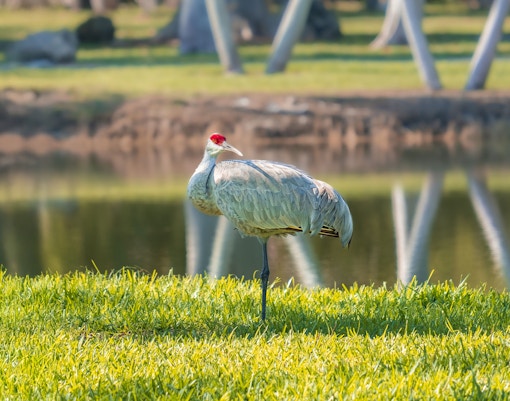
Sandhill crane
Tall, elegant, and often roaming in pairs, sandhill cranes are known for their trumpeting calls and graceful courtship displays. While they can be seen around the northern and prairie-like areas, they’re less common in the deeper marshes of Everglades National Park.
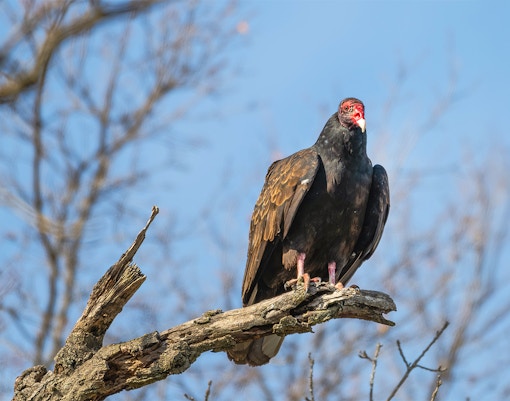
Turkey vulture
A master of soaring flight, turkey vultures circle effortlessly on rising warm air. They help keep the ecosystem clean by feeding on carrion.